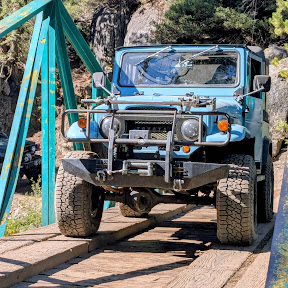
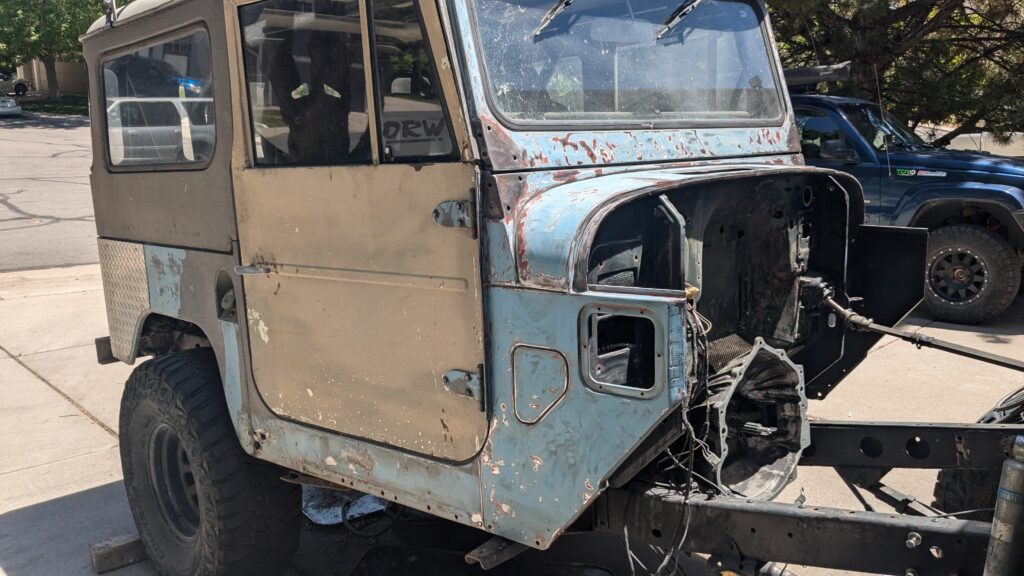
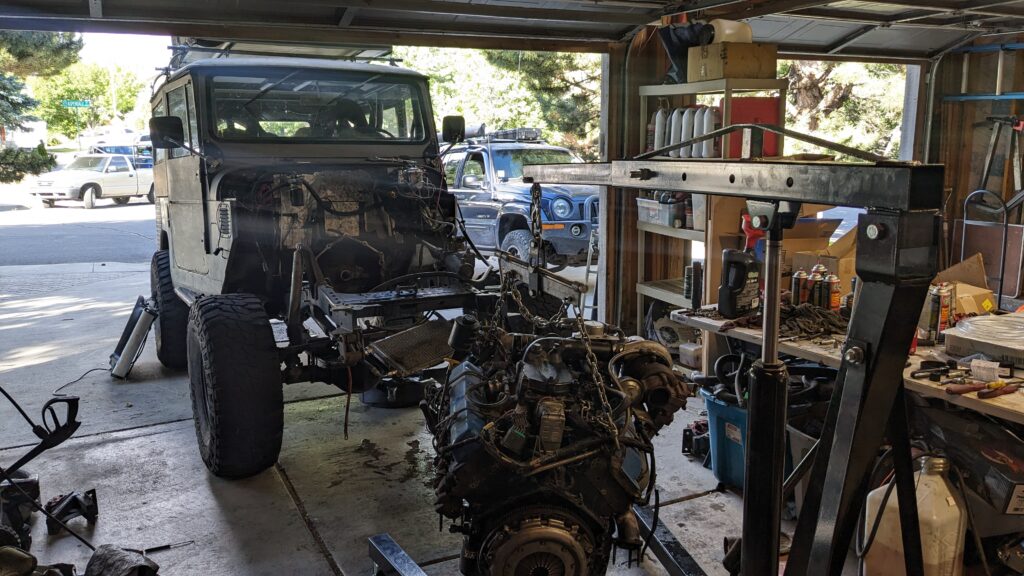
Classic FJ40 Land Cruiser — Diesel-to-LS Powertrain Swap
The project: Take a classic Toyota FJ40 Land Cruiser and give it a modern powertrain — again.
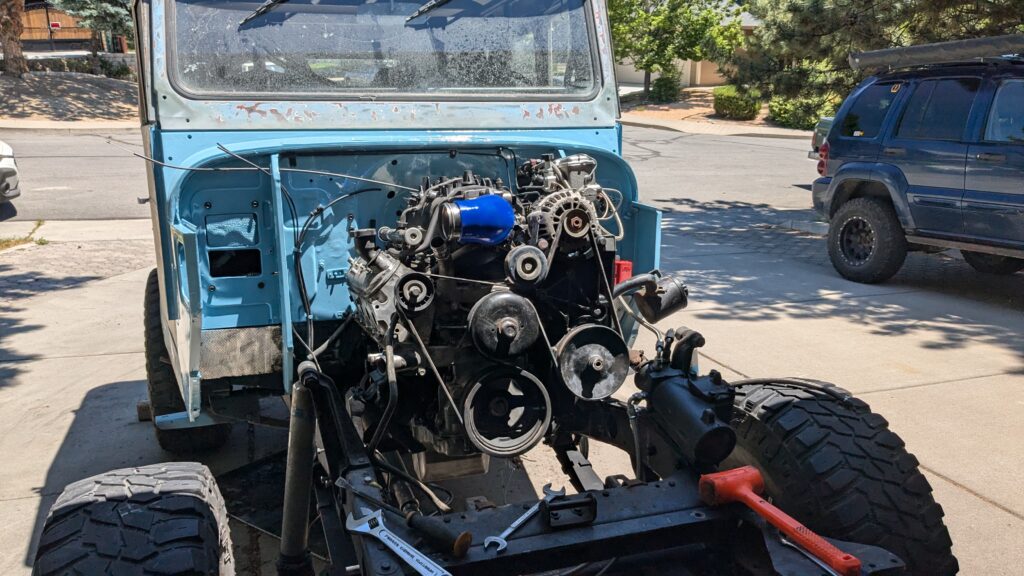
Round one Recap: Designed and fabricated all mounts and modifications to fit a GM 6.2L V8 turbo diesel (and later a 6.5L V8 turbo diesel) — engine mounts, NV4500, and eventually an Orion transfercase, cooling, electrical, and exhaust routing. Driveline angles were challenging and required a cut-and-turn on the front axle and custom drivelines. Steering clearance was rediculously tight and required a very creative steering box solution – a box out of an International Scout II. Cooling was also extremely tight, with very little firewall clearance and very little fan-to-radiator clearance. A/C required a remote mounted condenser, along with remote oil and power steering cooler. I had to get very creative to make it work.
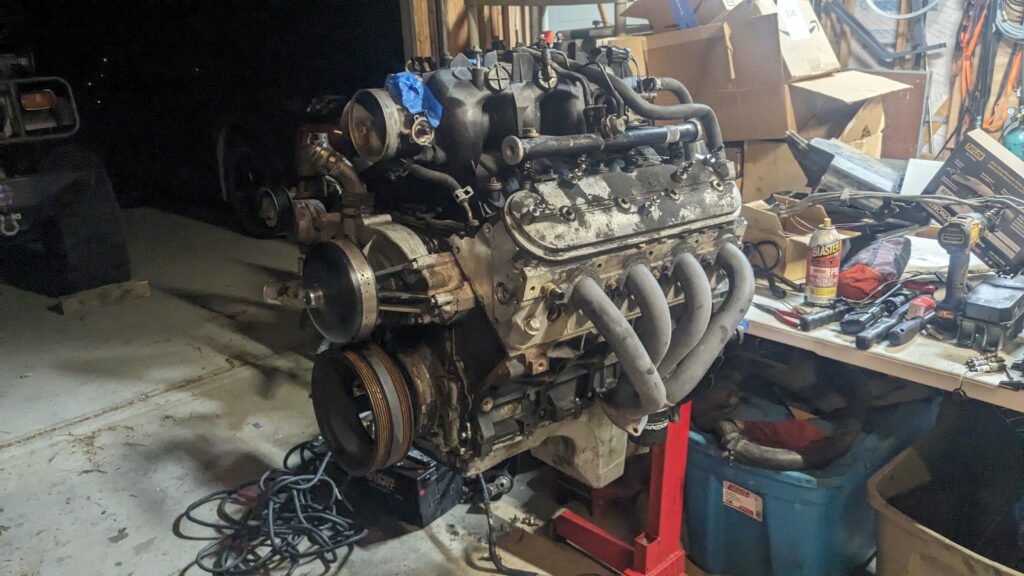
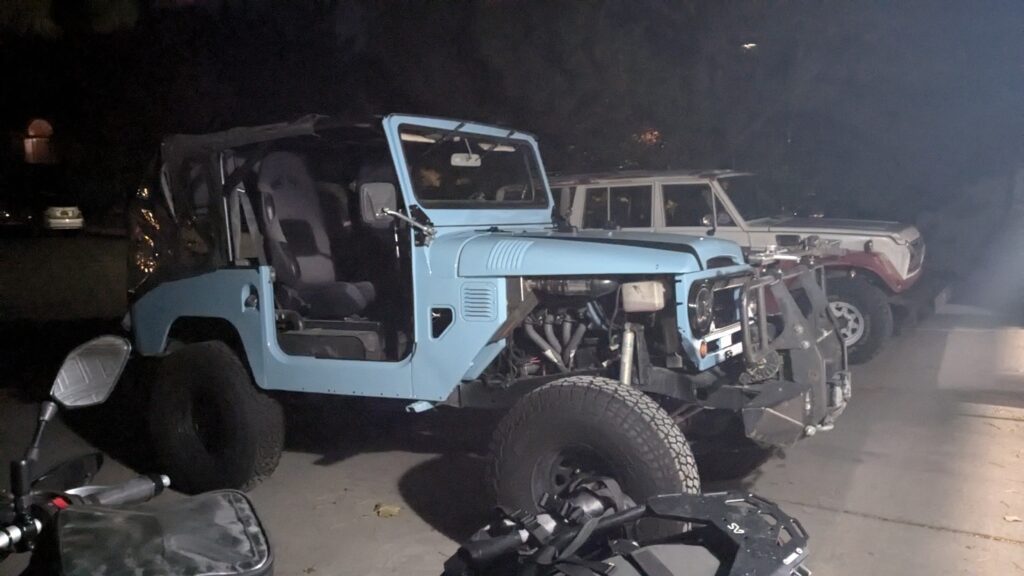
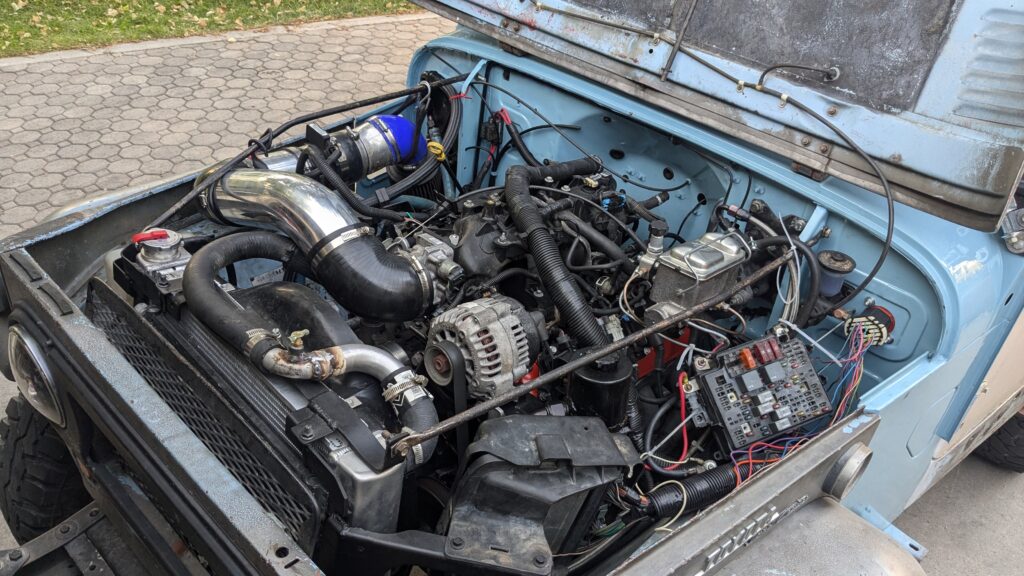
Round two: After about 5 years and probably 40,000 miles of running the diesel, longevity issues that plague the 6.2L and 6.5L V8 diesels and cooling issues that come with the small engine compartment of an FJ40 pushed a redesign around a GM LS V8 (in this case, a first generation 5.3L). Although I was able to re-use the mounts from the diesel (with off the shelf LS to small block adapters – the GM V8 diesel shared the small block V8 mounts) along with the transmission/tcase, steering, and some of the cooling system, substantial re-design of the electrical, radiator mounting and hose routing, and air intake were required. The second iteration benefited from every design choice of the first – like the bolt-on frame side motor mounts. Interestingly, the packaging is actually tighter. However, so far – about 25,000mi in, the LS is not showing any signs of issues. In fact, it still hasn’t been rebuilt from when it was pulled from a wrecked Chevy Tahoe in Pick’n’Pull. It also runs much cooler, despite having the same radiator, fan, and shroud combo from the last iteration on the diesel. In addition, highway drivability is much improved with substantially more usable power. The only drawbacks so far are cool-factor, and off-idle throttle response off road.
Of course – I didn’t stop at the engine swap this time. I also took a shot at fixing rust in the body and a full paint job! I’m not saying it’s good. But it is definitely different.
What this project demonstrates: real-world packaging constraints, load path design, fabrication (welding, machining), and the willingness to redesign your own work when problems crop up.